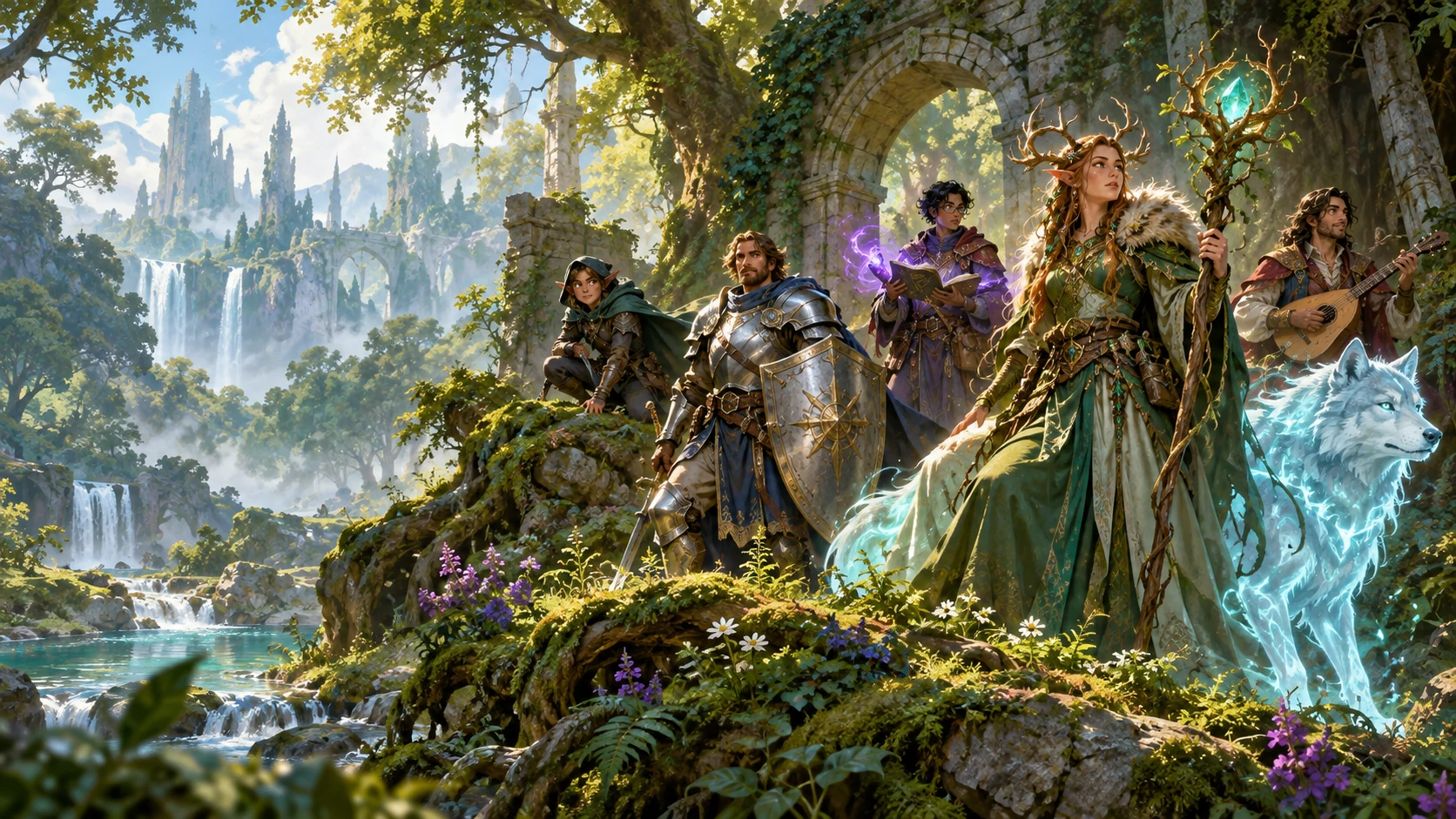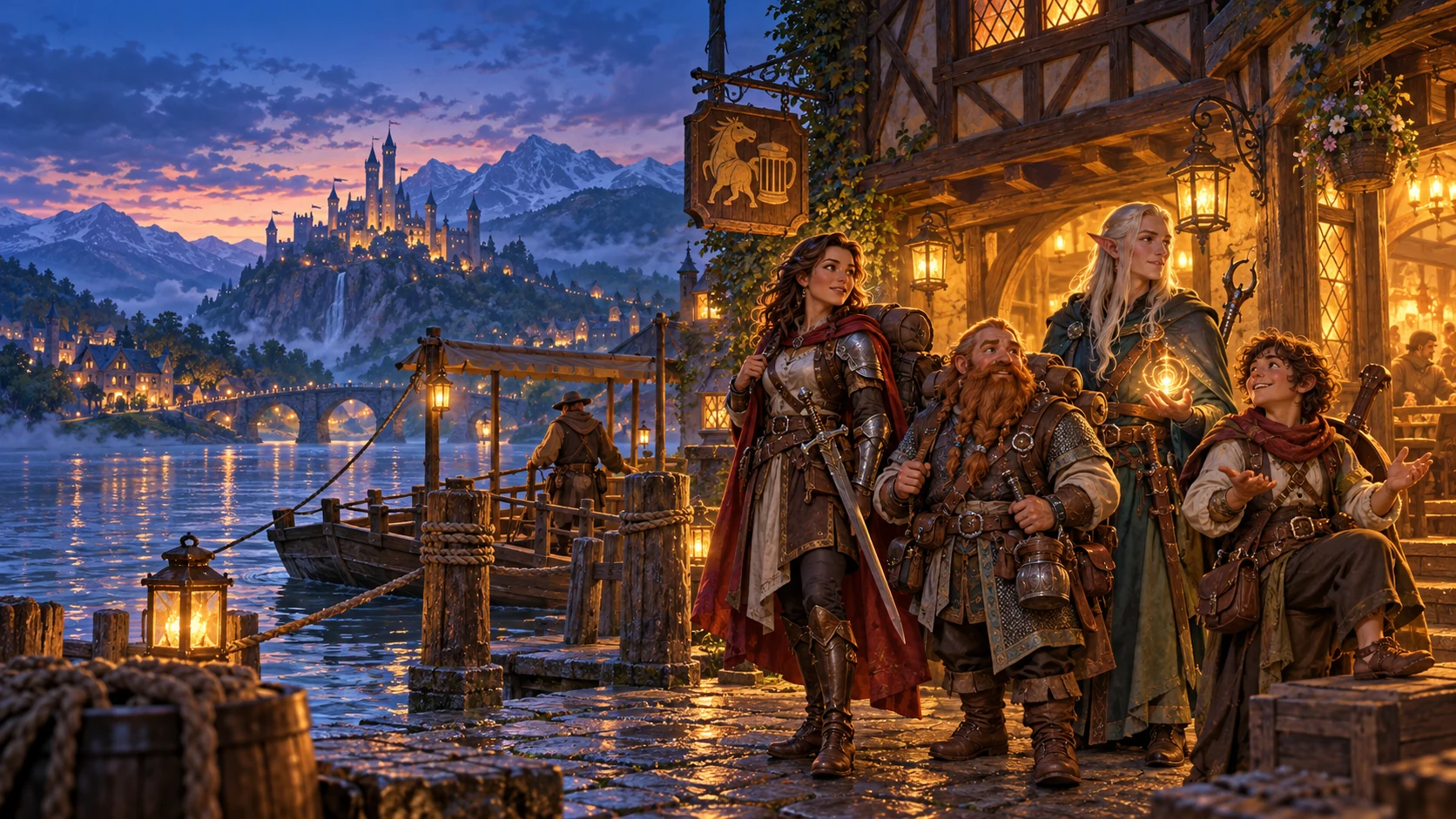
A practical introduction to tabletop D&D. Rules links refer to the 2024 revision of fifth edition; agree on an edition with your group before creating characters.
Start with the conversation
Dungeons & Dragons is a shared fantasy adventure. One person, the Dungeon Master, presents the world. The other players describe what their characters try to do. When an outcome is uncertain and a rule calls for it, dice help decide what happens. The story changes in response.
Imagine a ferry with a broken bell. The ferryman refuses to cross after dark, but someone on the opposite bank is waving a lantern. You can question him, inspect the boat, signal back, or walk away. You do not need to discover the one correct command. You need to tell the table what interests you.
The official Playing the Game chapter is a useful rules companion. For your first evening, concentrate on understanding the situation and making a choice.
What you need for your first DnD game
Find a group and a time everyone can actually keep. A short adventure with a clear end is often easier to organize than an open promise to play every week. Ask whether the group welcomes beginners and whether somebody can help with your character.
- A character sheet, either prepared for you or made with your DM.
- Dice or a digital roller, plus a way to take a few notes.
- The group’s chosen rules and any house rules that matter to your character.
- A shared expectation about session length, tone, and topics people want to avoid.
You can start with the free rules linked in this guide. You do not have to buy every book, a miniature, or an elaborate map before discovering whether you enjoy the game. If you play online, test the group’s voice chat and tabletop tools beforehand.
Make someone who has a reason to join in
A useful first character can fit into three sentences: what they want, what they are good at, and why they will stay with the party. A courier who wants to recover a lost letter is easier to bring into a story than a solitary legend who refuses every invitation.
Tell your DM the fantasy you want to play before worrying about a perfect build. “I want to protect people with a shield” gives them something concrete to help with. A prepared character is a perfectly good starting point; it leaves more attention for learning the table’s rhythm.
Use the official character creation chapter for the mechanical steps. If you are still choosing a play style, the DnD classes guide compares the kinds of decisions different characters invite.
What to do when the DM looks at you
Say what your character wants to achieve and how they try to do it. “I search the desk for a letter with the duke’s seal” is more useful than announcing a skill name without a goal. The DM can then explain what is possible and whether a roll is needed.
Ask questions about anything your character could reasonably notice. Is the window open? Does the ferryman look frightened or annoyed? Who else is watching the river? Clarifying the scene is part of play, rather than an interruption to it.
When another player has an idea, look for a way to make it more interesting. You might keep watch while they investigate or ask their character why the strange letter matters. Cooperation gives everyone more material to work with.
A small checklist beats a perfect performance
Before the session, write down your character’s name, their immediate goal, and one thing you want to ask another character. During play, note a person you meet and one unresolved question. Those few details are enough to make the next meeting feel connected.
You can speak in your normal voice. You can describe a conversation instead of acting it out. If you forget a rule, ask for help and keep the scene moving. The aim is to make choices with other people, not to deliver a flawless theatrical debut.
Afterward, mention one moment you enjoyed and one thing that confused you. That gives the group a practical way to improve the next game. If you want a quick fantasy detour between sessions, DnD Rouge is my browser tactics roguelike. Its supported 2014 rules subset and custom arena systems are separate from a full tabletop campaign.
Sources & further reading
Rules summaries link to their reference material. Character prompts, examples, and encounter outlines in this article are original DnD Lair ideas.

Creator of DnD Lair, DnD Survivor, and DnD Rouge. Writing about characters, encounters, and the ideas that make an adventure worth playing.