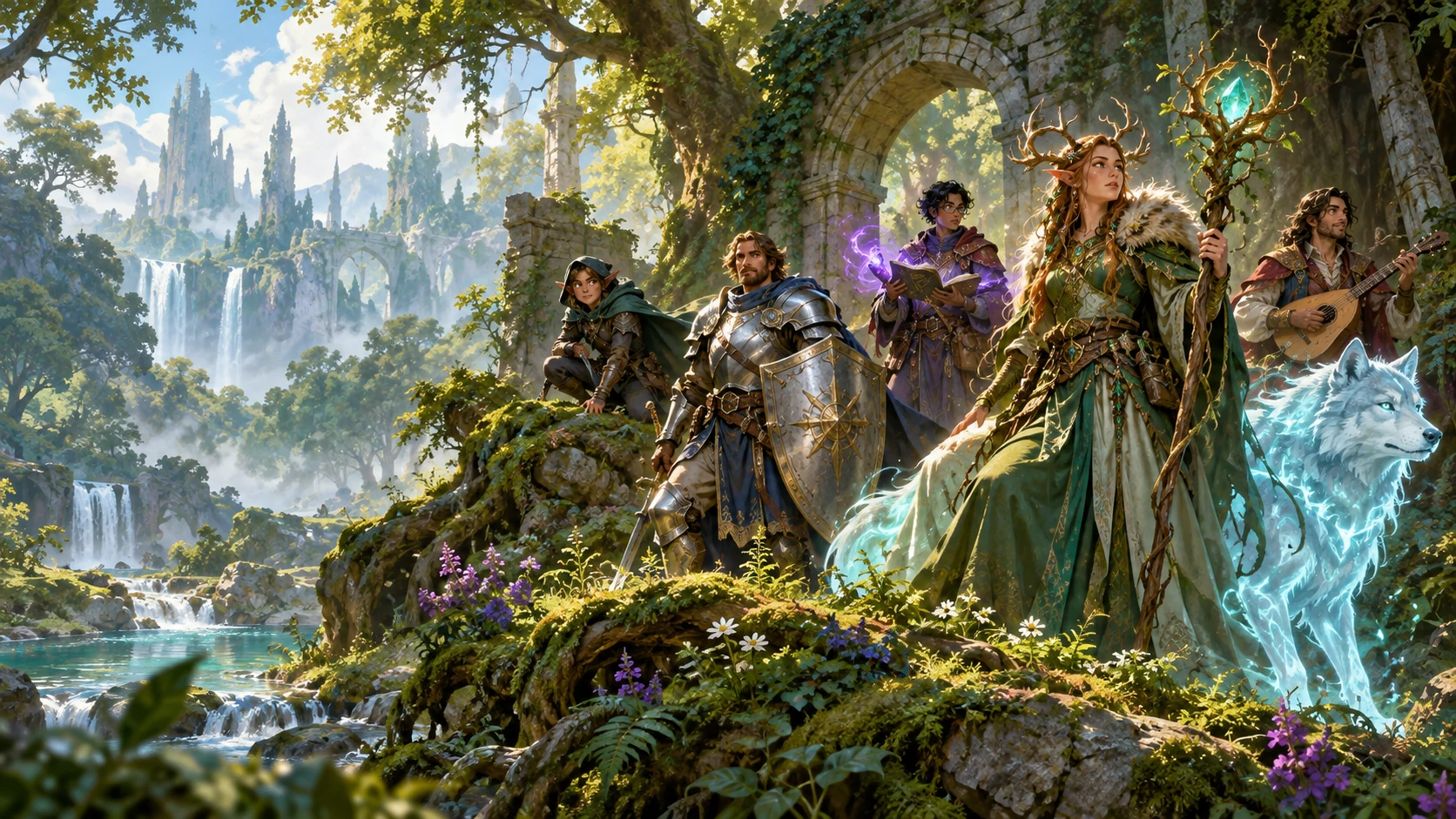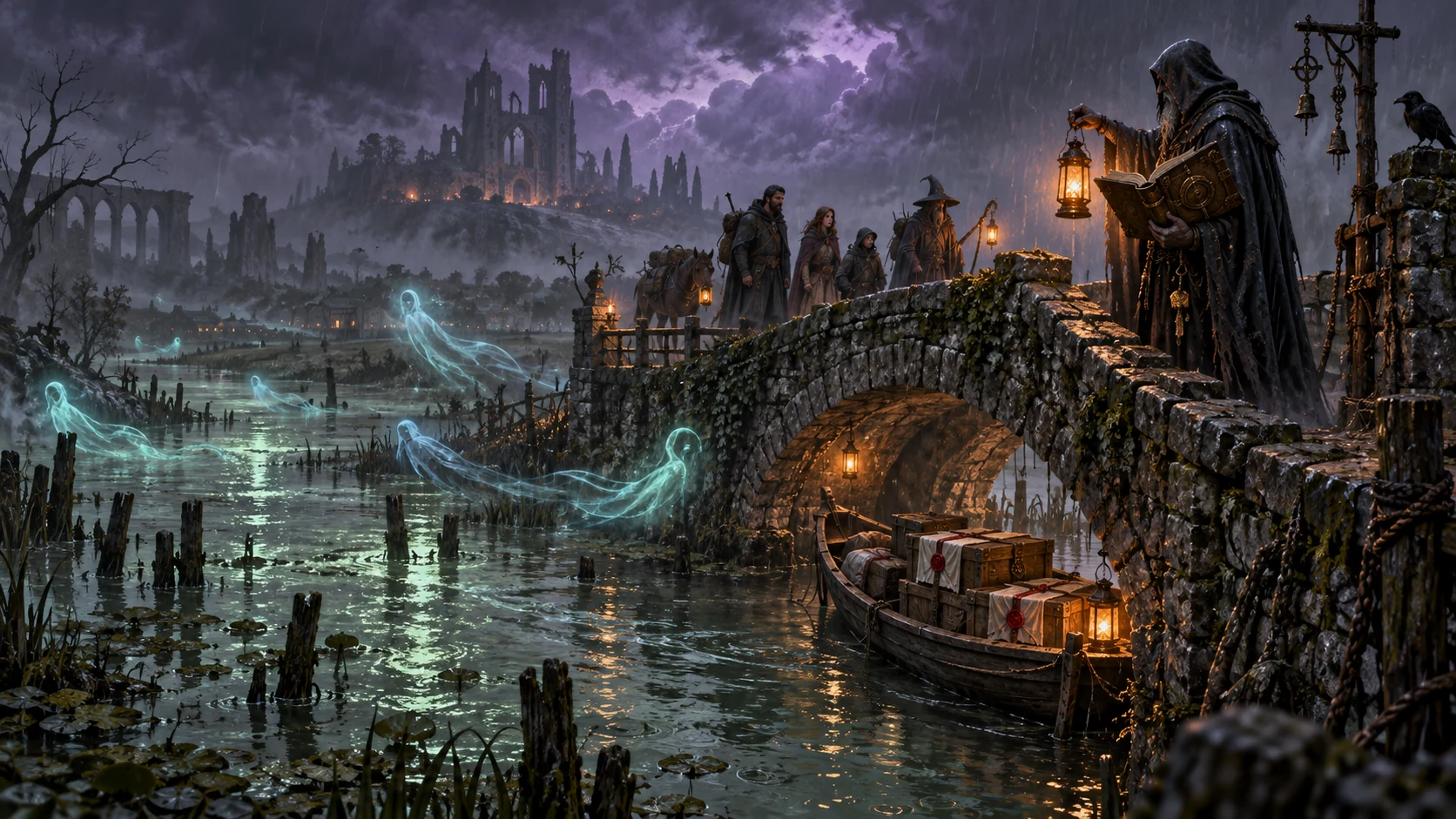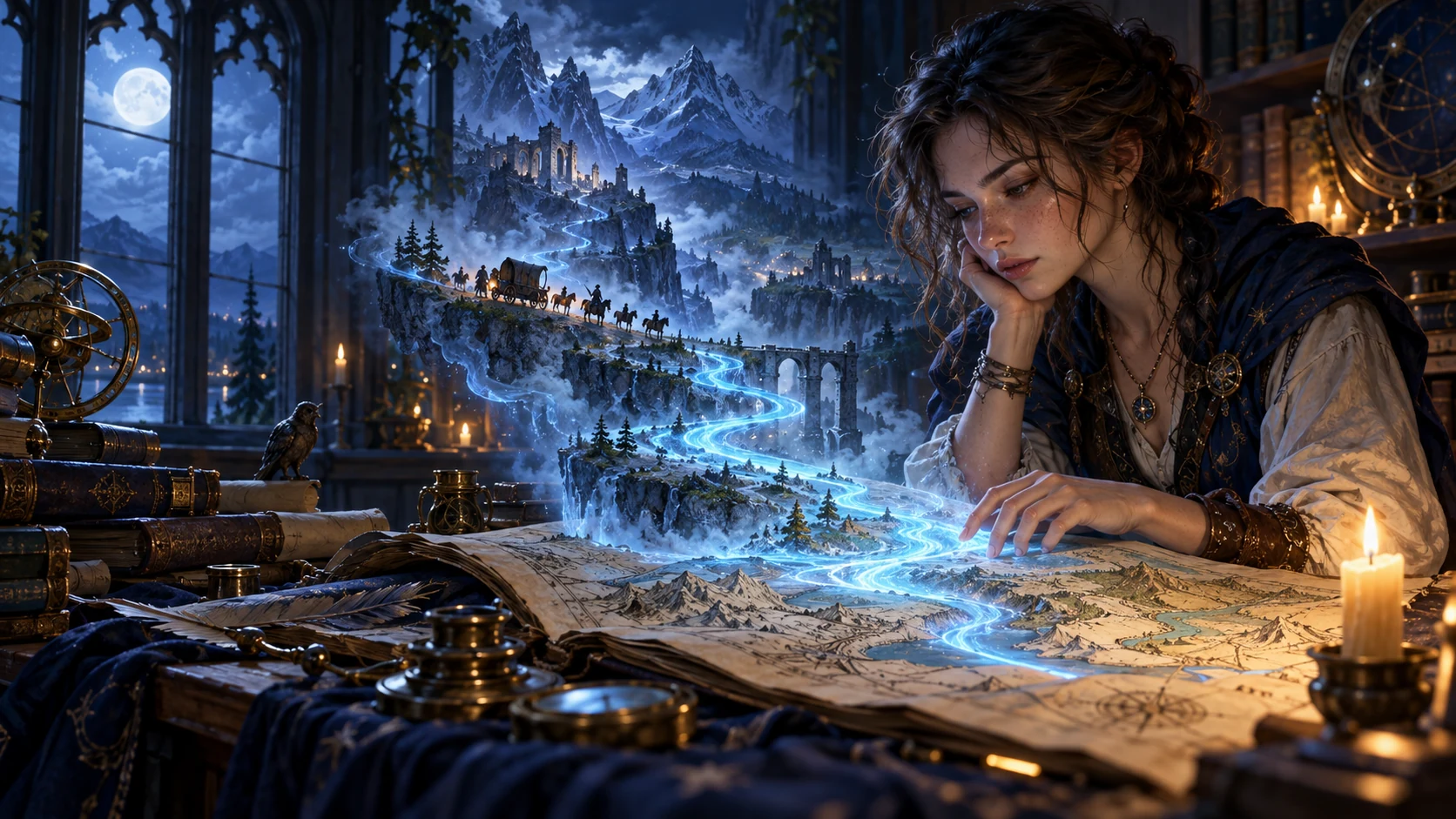
An original character writing exercise. It works across editions and does not change your character’s mechanical background or grant additional abilities.
Leave the best part unfinished
A backstory gives a character momentum. It can explain why they care about the next village, why they accept an invitation, or why a stranger’s name makes them hesitate. It does not need to settle every important event before the first session begins.
Try treating the backstory as a set of invitations. You offer the DM a relationship they might bring into play and a question the group might answer. You also give the other players a person they can get to know through choices, rather than through a speech at the tavern.
The official character creation chapter covers the mechanical character sheet. The exercise here is about the story you bring alongside it.
Use a goal, a relationship, and an open question
A goal: choose something your character can take a step toward soon. “Find the person who forged my letter” creates an immediate direction. “Become the greatest hero in history” may be an ambition, but it needs a smaller first step.
A relationship: name someone who wants something from your character. A former mentor, a younger sibling, or an irritated ferry keeper gives the world a way to respond. Ask the DM whether the person fits the campaign before defining their entire history.
An open question: leave a fact unresolved. Who changed the map? Why did the witness use your childhood nickname? Avoid deciding the answer in secret if you want the DM to have room to surprise you.
These anchors should be things you are happy to see in play. You can also tell the DM which parts you want left alone. Sharing a character detail is an invitation to collaborate, not unlimited permission to turn every loved one into a hostage.
An example: the cartographer with the wrong river
There is enough here to start a scene. Elan can visit the ferry keeper, compare copies of the atlas, or ask the party to investigate the road. The DM can decide whether the altered map is a fraud, a warning, or something stranger.
Notice what the example leaves out. Elan does not begin with a guaranteed royal patron, a magical map that bypasses every challenge, or the knowledge that they are the only person who can save the world. Those might become developments later, if the group wants them.
Add one reason to trust another character
Ask another player for a small shared event. Perhaps their character helped Elan carry a damaged trunk across a flooded street. Perhaps Elan once drew them a map without asking for payment. A modest memory gives both players something to refer to without forcing an elaborate shared history.
Then ask what your character does when they need help. Some people are direct. Others offer an unnecessary favor first. That habit can become a recognizable part of roleplaying and an easy opening for another player to respond.
A mysterious character can still be cooperative. Keep secrets that invite curiosity, while making their willingness to travel with the party clear enough for everyone to play the game.
Give your DM a useful handoff
Send a short summary with your goal, relationship, and question. Add one sentence about the kind of story you would enjoy, plus anything you do not want explored. Ask what should change to fit the setting. A conversation at this point can prevent a great deal of mismatched expectation later.
Keep the longer prose if writing it is fun, but make the usable pieces easy to find. If the campaign starts far from Elan’s river, the forged letter might travel with them. If the DM already has a map mystery, the two ideas might connect.
After a few sessions, let the character’s new relationships matter as much as the old ones. A backstory has done its job when it helps you enter the shared story. It does not have to remain the most interesting thing that has ever happened to your character.
Sources & further reading
Rules summaries link to their reference material. Character prompts, examples, and encounter outlines in this article are original DnD Lair ideas.

Creator of DnD Lair, DnD Survivor, and DnD Rouge. Writing about characters, encounters, and the ideas that make an adventure worth playing.