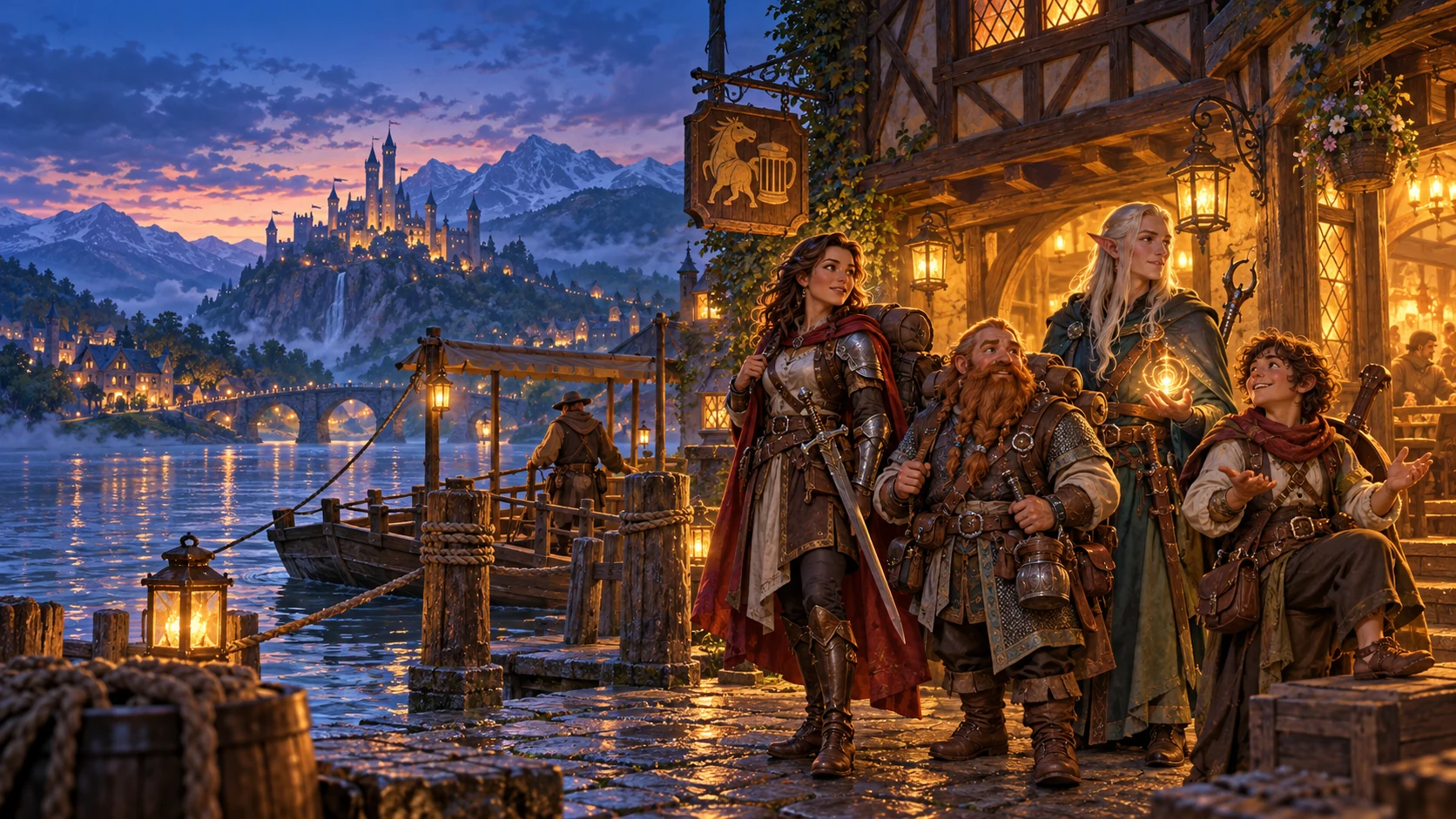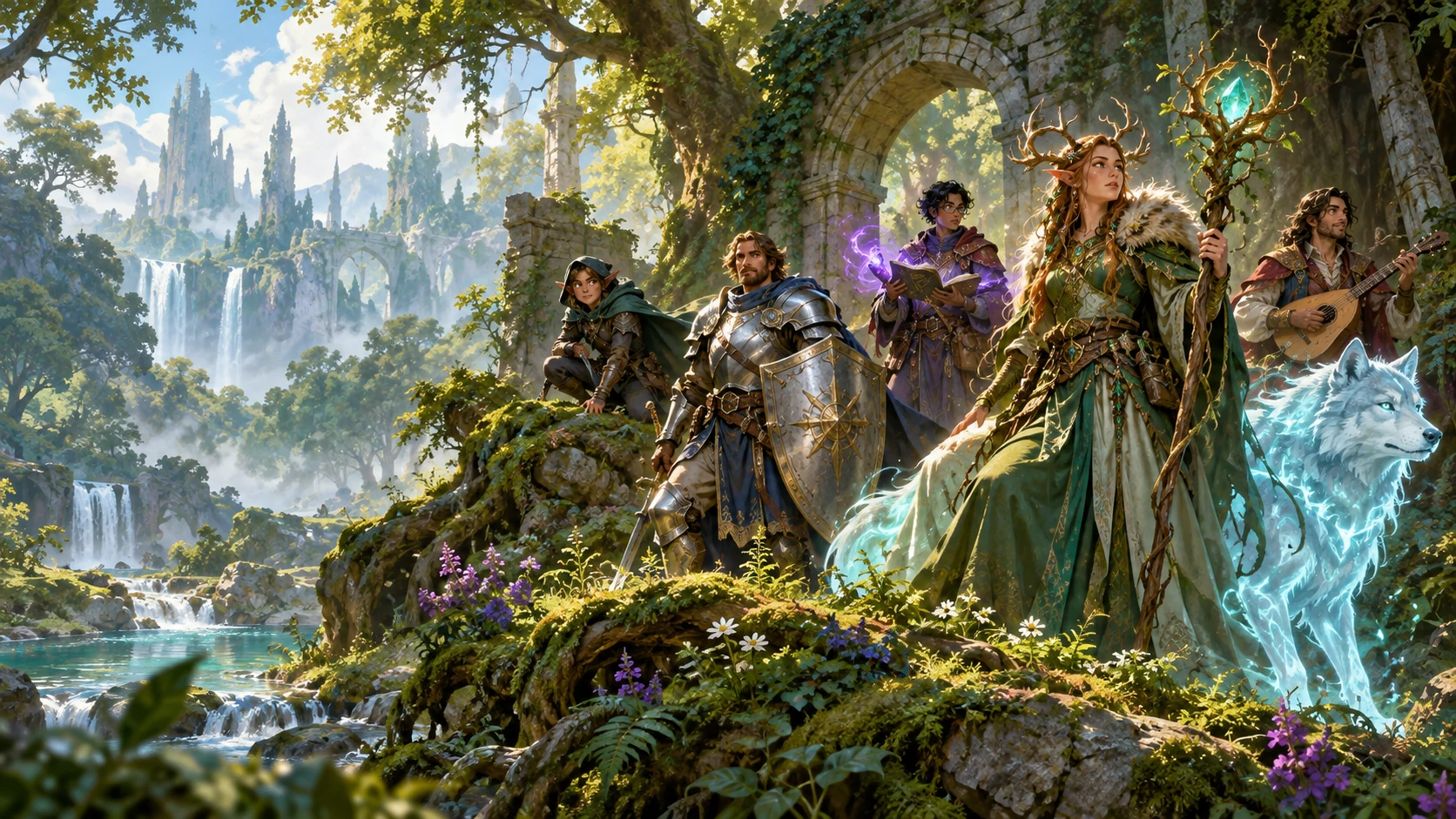
A play style guide to the twelve classes in the 2024 core rules. These are starting points for a character concept, rather than power rankings or a complete list of published options.
Choose a play loop before a build
Picture the moment when the table turns to you. Do you want to hold a doorway, find an unexpected route, encourage an ally, or choose the spell that changes the scene? Start there. A class gives structure to a fantasy, but the fantasy should still interest you when nobody is rolling damage.
The official character classes chapter describes the actual features and progression. The comparisons below are editorial prompts: a way to narrow your choice before you read those details.
Twelve core classes, twelve starting questions
| Class | Try this character question |
|---|---|
| Barbarian | What makes my restraint finally break? |
| Bard | Whose story am I trying to change? |
| Cleric | What does my faith ask me to do today? |
| Druid | What does this place need that its people have forgotten? |
| Fighter | What have I practiced until it became instinct? |
| Monk | What does my discipline look like under pressure? |
| Paladin | Which promise will I keep when it becomes inconvenient? |
| Ranger | What can I notice about the road that others miss? |
| Rogue | Where is the opening nobody else has seen? |
| Sorcerer | How has power changed the way people treat me? |
| Warlock | What did I accept, and what do I think it will cost? |
| Wizard | What question am I willing to travel for? |
A question leaves room for surprise. A paladin might be cheerful and pragmatic. A rogue might be the most trustworthy person in the group. A class does not require a fixed personality, accent, or moral outlook.
Choose how much you want to manage
Some players enjoy a small set of familiar tools. Others enjoy deciding which of many options fits the current problem. Neither preference is a measure of how good you are at roleplaying.
If you are considering a character with spells, read the spells you expect to use before the session. If you enjoy martial characters, look at what your chosen features let you do beyond repeating the same attack. The amount to track depends on your level, subclass, and specific choices, so a universal “easy class” label can hide more than it explains.
Ask your DM to help you identify a dependable default turn and one useful alternative. You can learn a character through a few reliable decisions, then expand when those decisions become comfortable.
Try the same scene with three different heroes
A merchant refuses to open a flooded gate because the last caravan never returned. Choose three classes that interest you and imagine how each character approaches the problem. Let the answers differ in motivation as well as method.
Your fighter might offer to lead the rescue because they trained the missing guards. Your bard might recognize the caravan’s traveling song. Your wizard might want to inspect the unusual tide marks. None of those ideas needs a class feature to become a useful contribution.
Then imagine the gate opens onto danger. Which version of the character makes you want to find out what happens next? That curiosity is a better starting point than selecting a class you do not enjoy because a ranking calls it optimal.
Build a connection before you fill a role
Talk to the other players about what they want to try. A balanced spreadsheet cannot guarantee a fun party, and an unusual group can be full of useful contrasts. Check the campaign’s needs with the DM instead of assuming that every table requires the same lineup.
Give your character one reason to ask another party member for help. A scholar needs a local guide. A confident duelist needs someone who can tell when they are bluffing. These connections create a reason to share scenes.
For the next step, use the backstory framework to turn a class concept into an immediate goal and a relationship. If you want to see fantasy classes in a different format, DnD Survivor puts character variety into a short browser horde survival game. It is an adaptation with its own systems, rather than a tabletop rules reference.
Sources & further reading
Rules summaries link to their reference material. Character prompts, examples, and encounter outlines in this article are original DnD Lair ideas.

Creator of DnD Lair, DnD Survivor, and DnD Rouge. Writing about characters, encounters, and the ideas that make an adventure worth playing.