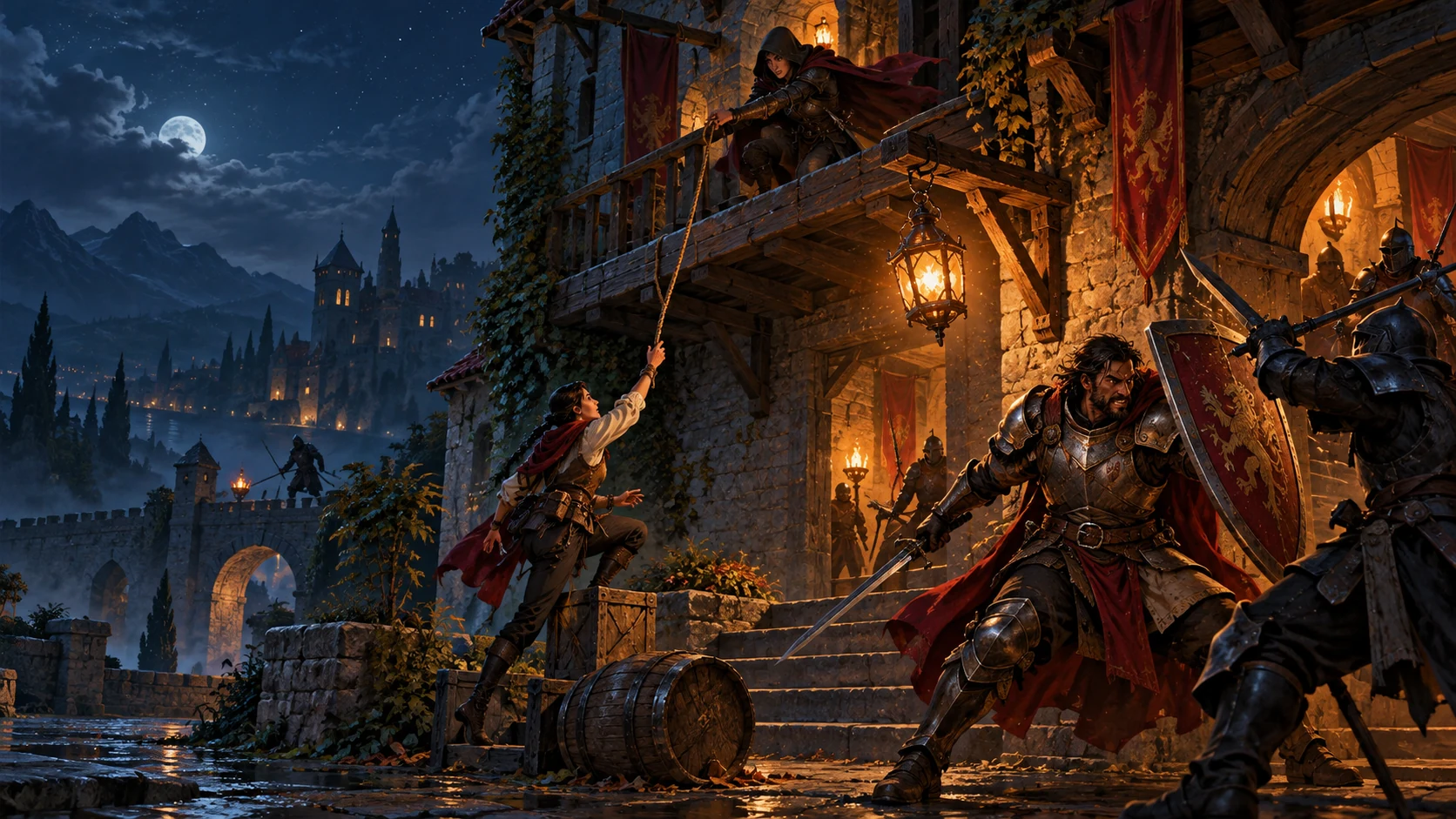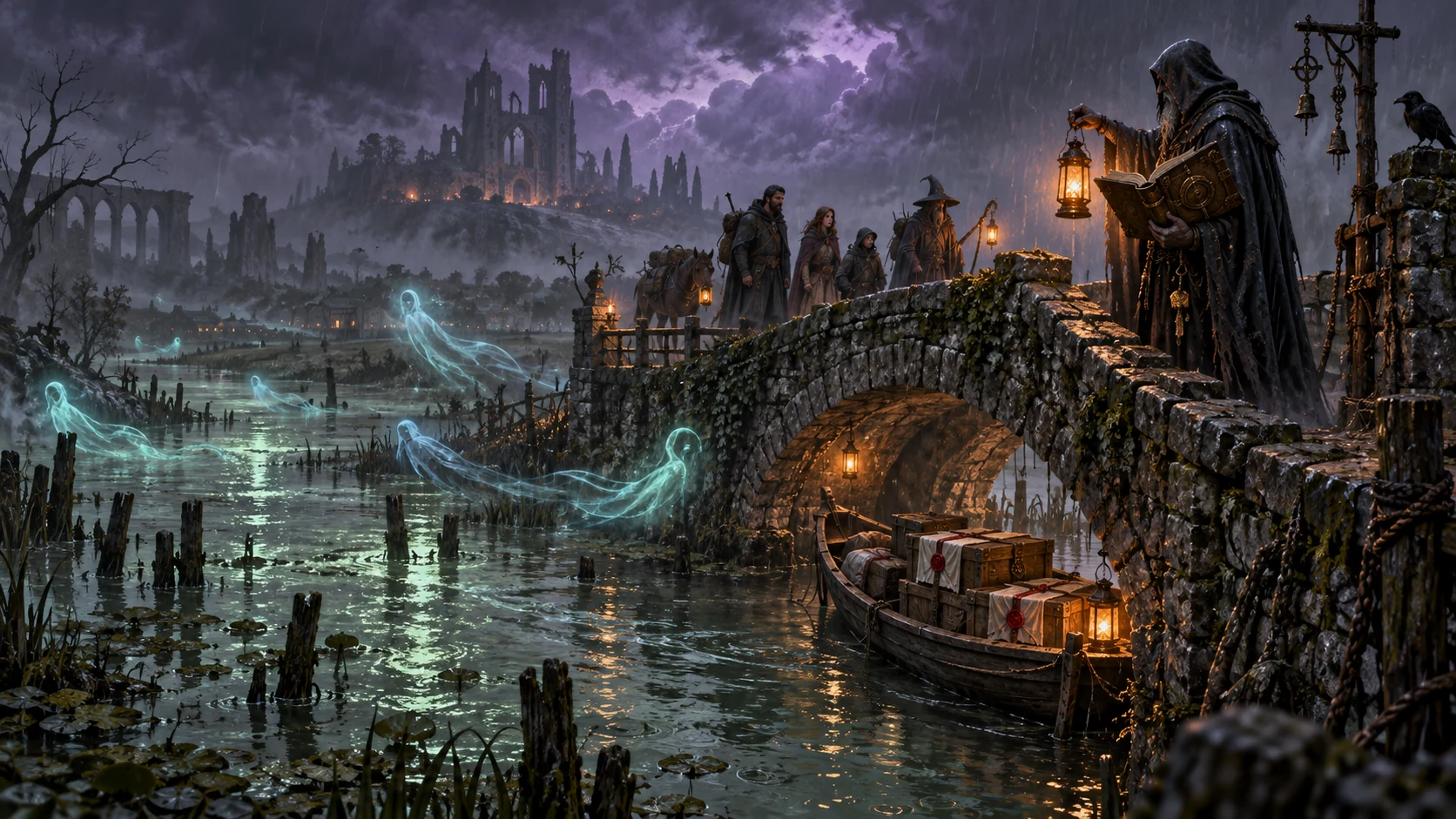
An original encounter writing framework. The example is a situation outline, not a balanced stat block or a promise that it suits every party level.
Decide what the players can change
Before choosing monsters, write the result the party might achieve. Rescue the ferryman. Keep the bridge open. Discover which invitation is forged. Give the players an outcome they can understand and more than one possible way to pursue it.
A fight can be part of that situation. So can negotiation, exploration, or a retreat with valuable information. If defeating every enemy is always the only way forward, different encounters can begin to feel remarkably similar even when the creatures change.
The official Playing the Game chapter covers the underlying modes of play. The method below is an original preparation exercise for giving those modes something interesting to work on.
Write a goal, a pressure, and a change
The goal tells the players what is at stake. Make it concrete enough that they can notice progress. “Reach the other side with the medicine” is easier to act on than “Have a dramatic river encounter.”
The pressure gives them a reason to decide. It might be rising water, an approaching patrol, or two people who both need the same boat. Pressure does not have to mean rushing the players in real time. You can let them discuss their options while the characters face a difficult situation.
The change prevents the opening arrangement from remaining static. A cable breaks, a witness arrives, or a frightened creature reveals what it actually wants. Show a sign before the change when possible, so players can respond rather than simply absorb a surprise.
An original encounter: the bridge that collects names
The party reaches a narrow bridge carrying medicine for a village. A tired keeper asks every traveler to write their name in a ledger. The bridge has started forgetting the people who cross it, and the keeper believes the ledger is the only thing preserving them.
A courier refuses to sign because the name on their papers is false. Below the bridge, a boat has become caught around one of the supports. Its passenger keeps calling for someone the keeper insists never existed. One of the bridge’s lanterns goes dark whenever a name fades from the page.
The party can question the keeper, investigate the ledger, help the boat, or arrange a different crossing. None of these routes needs to be declared the correct one during preparation. Decide what each person knows, what they fear, and how the bridge responds to plausible attempts.
For a concrete escalation, show a loose support shaking as the boat strikes it. If nobody changes that situation, the next impact can damage the bridge. This gives the party visible information and an opportunity to act, without requiring you to force a particular solution.
Put useful information where players can find it
Separate the information that starts the encounter from the information that rewards investigation. Everyone should be able to see the trapped boat, the worried courier, and the lanterns. Closer attention might reveal that the ledger contains yesterday’s rain stains on a page supposedly written years ago.
If a clue is essential for the story to continue, consider making it discoverable through several reasonable approaches. A failed attempt can introduce a cost, a complication, or a different lead. It does not have to erase the only possible route into the next scene.
Keep this distinction clear with your group: deciding how a scene responds is DM preparation and adjudication, not an automatic rule that every failed roll must secretly succeed.
Prepare responses instead of a script
Write a few likely reactions. The keeper relaxes when someone helps the boat. The courier shares the false papers if the party offers privacy. A fading name returns when its owner tells a true story about themselves. These are possible responses, not mandatory scenes.
If you add combat, choose appropriate creatures and difficulty using your table’s rules and the party’s circumstances. This outline deliberately does not attach a level or challenge rating. Resources, terrain, party size, and the objective all matter.
After the session, note the decision the players actually cared about. Perhaps nobody pursued the name mystery, but everyone wanted to protect the courier. That is useful information for the next encounter. Good preparation leaves enough room to notice what the table makes interesting.
Sources & further reading
Rules summaries link to their reference material. Character prompts, examples, and encounter outlines in this article are original DnD Lair ideas.

Creator of DnD Lair, DnD Survivor, and DnD Rouge. Writing about characters, encounters, and the ideas that make an adventure worth playing.